


Blog
Coffee Table Size Guide for Better Living Rooms

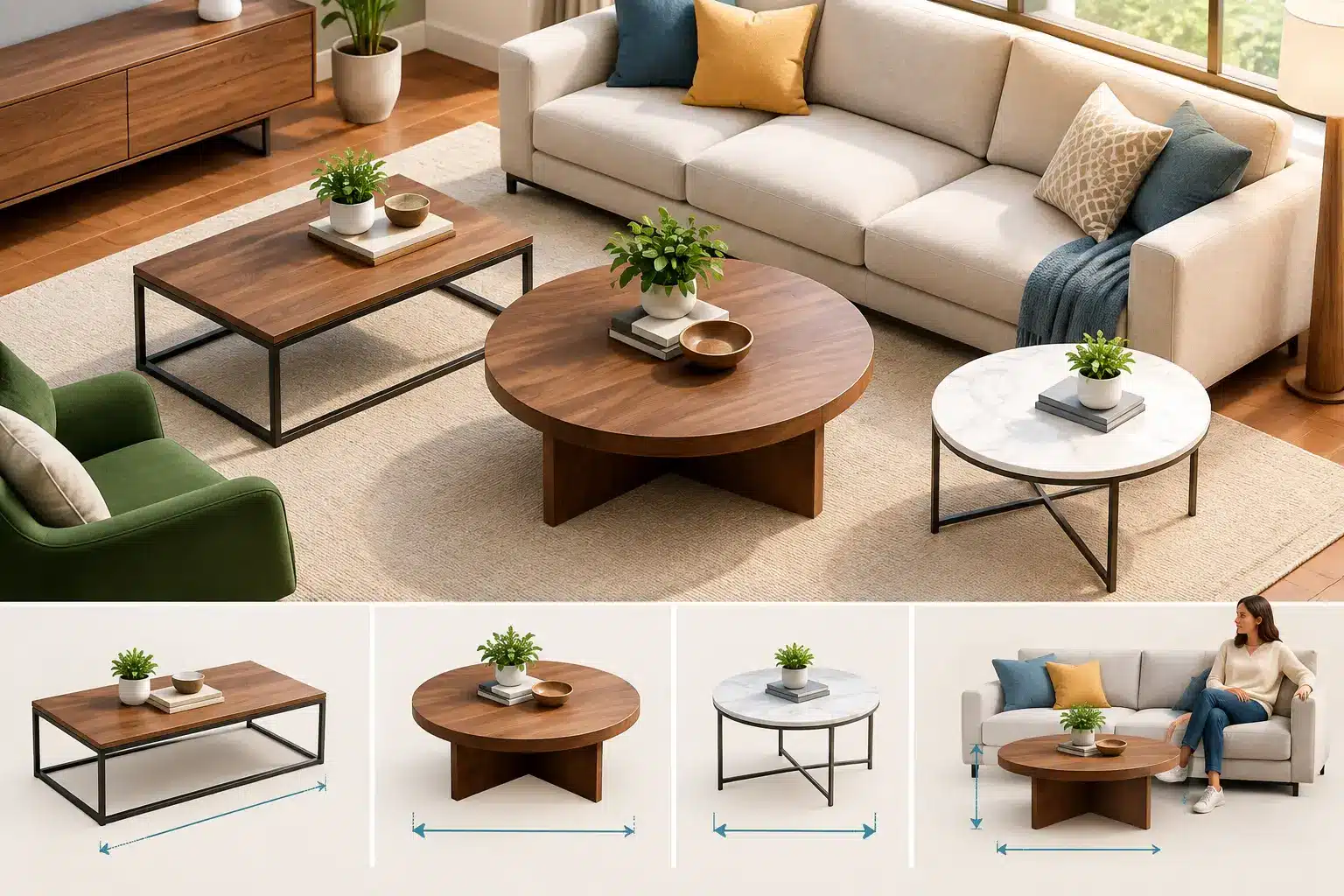
A coffee table can make a generous sofa feel grounded and inviting, or make an otherwise beautiful living room feel difficult to move through. This coffee table size guide focuses on the measurements that matter most: proportion to your seating, comfortable reach, walking clearance, and the way your household actually uses the room.
The right table is not simply the largest piece that fits in front of the sofa. It should create a natural center for conversation, hold the essentials within reach, and leave enough open floor space for the room to breathe. In a Dubai apartment, a family villa, or a hospitality lounge, those same principles help create a more composed and comfortable setting.
Start With the Sofa, Not the Empty Floor
Your sofa establishes the scale for the coffee table. Measure its overall width, then use that number to identify a table length that looks intentional rather than undersized or overpowering.
As a dependable rule, choose a coffee table that is about two-thirds the length of your sofa. For example, a 90-inch sofa generally pairs well with a table around 54 to 60 inches long. A 72-inch sofa often suits a table in the 42- to 48-inch range.
This is a guideline, not a restriction. A low-profile sectional can support a slightly larger table because its visual weight is spread across the room. A sofa with slim arms and raised legs may look better with a more compact table. The goal is to give the seating area a clear center without creating a solid block across its full width.
For an L-shaped sectional, measure the main seating run rather than both sides combined. A rectangular or oval table usually follows the longer side well. In a deep sectional where people sit on two adjacent sides, a generous square table can be especially practical because everyone can reach it comfortably.
Coffee Table Size Guide: Height and Distance
Length is only one part of a well-proportioned arrangement. Coffee table height and placement determine whether the room feels easy to use every day.
Choose a Height Close to the Seat Cushion
Most coffee tables sit between 16 and 18 inches high. Ideally, the tabletop should be level with the sofa seat cushion or up to two inches lower. This height makes it easy to set down a drink, place a book, or rest your feet without interrupting the relaxed line of the seating.
A lower table can work beautifully with a deep, contemporary sofa, particularly when the room has a calm, lounge-like feel. It may be less convenient, however, for frequent entertaining or for anyone who prefers a firmer, more upright seat. Taller tables can suit sofas with higher cushions, but a top that rises noticeably above the seat often feels visually heavy and less comfortable to reach.
If you are customizing a sofa or selecting one with a particularly deep cushion, measure the finished seat height rather than relying on a standard coffee table dimension. A small adjustment can make a major difference in the finished room.
Leave 16 to 18 Inches From the Sofa
Keep roughly 16 to 18 inches between the front edge of the sofa and the coffee table. This is close enough for comfort and far enough to allow people to sit down and stand up easily.
In a compact living room, you can reduce that distance to around 14 inches if necessary, especially with a smaller round table. Less than that tends to feel cramped. In a large space with deep seating, extending the gap to 20 inches can work, but only if the table remains within easy reach.
Around the outer sides of the seating arrangement, aim for 30 to 36 inches of clear walking space. This matters near doors, media consoles, and the main route through the room. A table may technically fit, yet still disrupt the way people move through the space.
Select a Shape That Supports the Layout
The best coffee table shape often becomes clear once you consider circulation and the silhouette of the seating. Rectangular tables are a natural choice for standard three-seat sofas and longer sectionals. They provide ample surface area while echoing the sofa’s horizontal line.
A round table softens a room with many straight edges and is especially useful where pathways are tight. With no corners to navigate, it is a comfortable choice for family homes and busy living spaces. A round design also works well between facing sofas, although it may offer less surface area than a rectangular option of similar width.
Square coffee tables suit square seating zones, such as an L-shaped sectional with equal-length sides or four armchairs arranged for conversation. They offer a balanced focal point, but need sufficient room around them. In a narrow layout, a square table can quickly make circulation feel restricted.
Oval tables offer an appealing middle ground. Their extended shape complements a sofa, while curved ends keep the space feeling open. They are particularly effective in apartments where the living room also serves as a passage to a dining area, balcony, or entry.
For very large seating areas, consider two smaller coffee tables instead of one oversized piece. Two matching round tables, or a pair of nesting tables, can create flexibility without making the center of the room feel too dense. They can be separated for entertaining, then grouped together for a more tailored look.
Account for Everyday Use Before Choosing Materials
Size and shape should work with the table’s purpose. A formal sitting room may only need a refined surface for flowers, books, and occasional drinks. A family living room may need more usable area, softer edges, and a finish that handles regular use with ease.
If children frequently play in the space, rounded corners, upholstered ottomans, or low tables with softened edges are worth considering. An ottoman topped with a tray can provide a flexible coffee-table alternative, adding comfort and extra seating when guests arrive. It does require a stable tray for drinks and decor, so it is best for households comfortable with a slightly less structured surface.
Storage also affects the ideal proportions. A table with drawers or a lower shelf can keep remotes, magazines, and throws organized, but the added volume may feel heavy in a smaller room. In that setting, an open-base table with slender legs can preserve a lighter visual effect.
Material changes the visual weight as well. Stone, solid wood, and fully upholstered pieces feel substantial and often look best when their dimensions are carefully restrained. Glass and open metal designs can appear lighter, allowing a somewhat larger footprint without overwhelming the room. Durability, maintenance, and the surrounding finishes should guide the final decision alongside measurements.
Measure the Rug and Supporting Furniture
A coffee table should sit fully on the area rug whenever possible. The rug needs to be large enough to connect the front legs of the sofa and nearby chairs, with the table centered comfortably within that zone. A small rug beneath a large table tends to make the whole arrangement look disconnected.
Also consider side tables, recliners, and media furniture. If a side table sits beside the sofa, it should be close in height to the sofa arm for easy use. Ensure its placement does not reduce the route around the coffee table. In rooms with reclining seats, allow clearance for the footrest before finalizing the table position.
For a television wall or media console, leave enough room for people to pass in front of the coffee table without brushing against it. This is especially relevant in open-plan homes, where the living room may be part of a larger daily circulation path.
When Custom Dimensions Make More Sense
Standard coffee table sizes are useful starting points, but they cannot account for every room. An unusually long sofa, a curved sectional, a compact apartment layout, or a hospitality lobby with multiple seating groups may call for a tailored solution.
Custom dimensions allow the table length, width, height, finish, and base design to work with the furniture around it. This can be valuable when matching an existing sofa, accommodating a particular walkway, or creating a coordinated furnishing scheme across a villa or commercial space. Homess by Sky Space Furniture can help align custom furniture specifications with the practical demands of the room, rather than asking the room to adapt to a fixed size.
Before ordering, mark the proposed table footprint on the floor with painter’s tape. Walk around it, sit on the sofa, and imagine setting down a cup or reaching for a book. The right coffee table size will feel quietly natural: close when you need it, out of the way when you do not, and perfectly at home in the room.