


Blog
Hotel Lobby Furniture UAE: A Better Guest Welcome

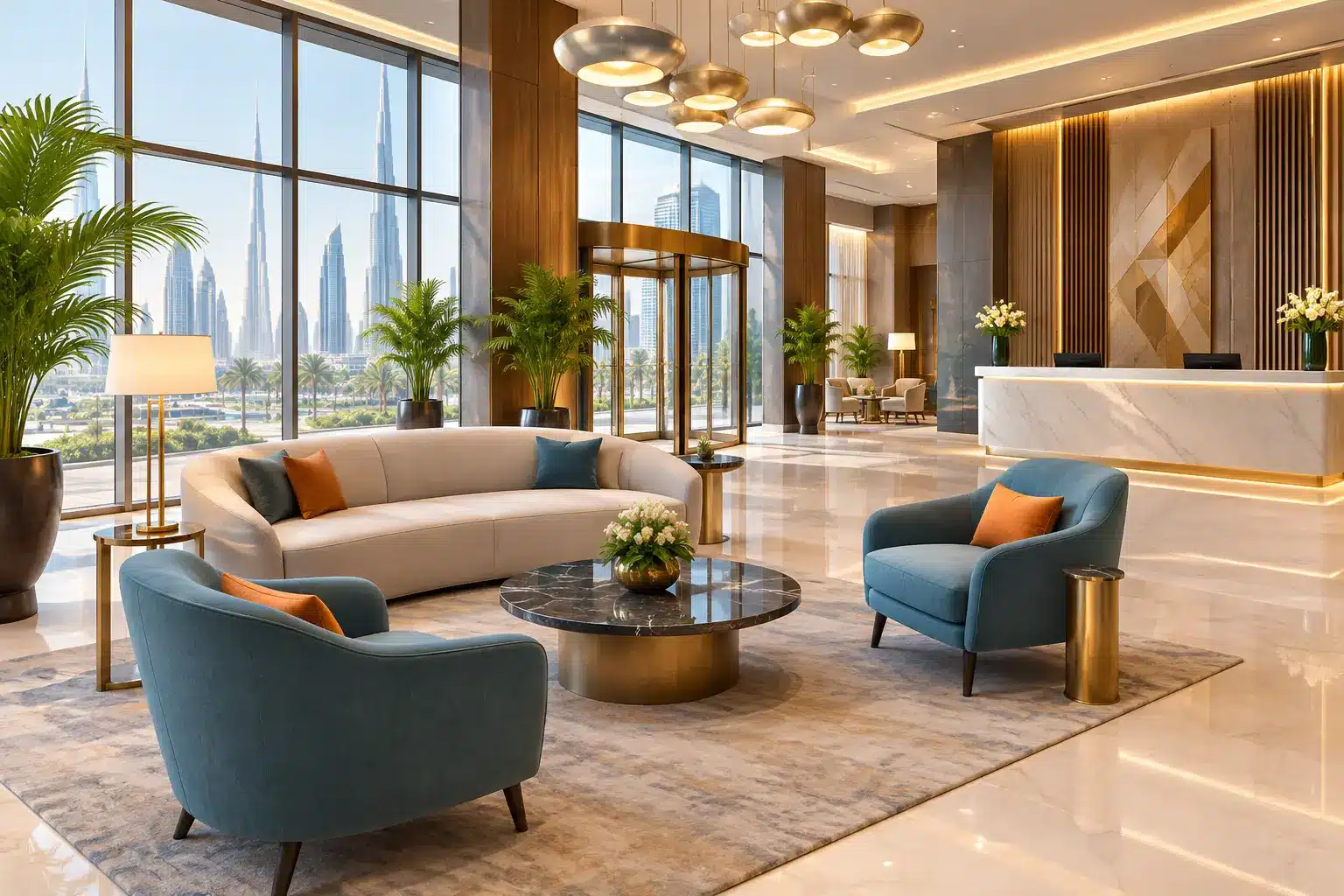
A hotel lobby has only a few seconds to make its point. Guests notice whether seating looks inviting, whether check-in feels organized, and whether the room offers a comfortable place to pause. The right hotel lobby furniture UAE properties choose must do more than look impressive in photographs. It needs to support real movement, frequent use, varied guest needs, and the character of the hotel itself.
For boutique hotels, large city properties, serviced residences, and resort reception areas, the best approach is to design the lobby as a sequence of useful moments: arrival, waiting, meeting, working, and relaxing. Furniture gives each moment a clear place.
Start With the Guest Journey, Not a Furniture List
A lobby can be furnished with beautiful sofas and still feel awkward. This usually happens when pieces are selected individually rather than planned around how people use the room. Before choosing an armchair, coffee table, or reception-side bench, consider what happens from the entrance onward.
Guests arriving with luggage need an open route to reception. Families may need a seating area where children can stay close without blocking circulation. Business travelers often look for a quiet chair, a side table, and accessible charging. Visitors waiting for a guest need a comfortable place to sit without feeling as though they are occupying a restaurant table.
These needs do not require a crowded lobby. They require purposeful zoning. A welcoming lounge arrangement near the entrance can create an immediate sense of comfort, while a more private cluster of armchairs suits conversations or short work sessions. Banquette seating along a wall can add capacity without filling the center of the room. The best layout depends on the building footprint, guest profile, and daily traffic pattern.
Choose Hotel Lobby Furniture in UAE for Lasting Comfort
A lobby chair receives far more use than a chair in a private living room. Upholstery, cushion construction, frame strength, and table surfaces should be selected with that reality in mind. A soft-looking seat that loses its shape after a season does not support a premium guest experience.
Comfort begins with proportion. Lounge seating should be easy to enter and leave, particularly for older guests and visitors in formal clothing. Very low sofas may suit a dramatic residential interior, but they can feel impractical in a busy reception setting. Armchairs with supportive backs and sensible seat heights are often a stronger long-term choice.
Material selection is equally important in the UAE. High-use hospitality spaces benefit from upholstery that can be maintained easily and performs well under frequent cleaning. Textured woven fabrics, quality performance textiles, and selected leather-look finishes can all work, depending on the design direction and maintenance plan. Light fabrics can create a calm, airy look, but they require a realistic approach to cleaning and stain management. Darker tones and patterned upholstery are often more forgiving in high-traffic zones.
For tables, prioritize stable bases and durable tops. Coffee tables should be substantial enough not to shift when guests set down a bag or lean forward. Rounded corners can soften circulation routes and reduce sharp visual edges, especially in compact lobbies. Stone-look, wood veneer, metal, and carefully selected laminate finishes each offer a different balance of warmth, durability, and budget.
Size Matters More Than Number of Seats
Adding more seats is not always the solution to a busy lobby. Oversized sofas can limit circulation and make a room feel less flexible. Smaller lounge chairs, movable ottomans, and compact side tables can offer more adaptable seating while keeping pathways open.
A practical plan leaves clear walking space around reception, elevators, entrances, and luggage routes. It also gives staff a direct view across the main arrival area. If a lobby regularly hosts groups, movable seating can help the space shift between everyday use and peak check-in periods.
Build a Look That Belongs to the Property
Hotel furniture should feel connected to the wider interior, not like a separate showroom display. The lobby is where guests first understand the property’s personality, whether it is quiet and residential, polished and corporate, or warm and family-oriented.
A contemporary business hotel may use structured sofas, tailored armchairs, and crisp tables in charcoal, taupe, walnut, or brushed metal. A resort-inspired property may introduce softer silhouettes, lighter woods, woven textures, and natural-toned upholstery. For a boutique hotel, one distinctive accent chair or custom ottoman can create a memorable focal point without overwhelming the room.
Visual cohesion does not mean every piece must match exactly. In fact, matching sofa sets can make a hospitality lobby feel predictable. A better approach is to coordinate forms, materials, and colors while varying the seating types. For example, a sofa and two armchairs may share a similar fabric family, while a contrasting occasional chair adds depth. Coffee tables and side tables can use complementary finishes rather than identical shapes.
Where Custom Furniture Adds Real Value
Standard furniture can work well for straightforward spaces, but hospitality projects often have details that call for customization. An unusually narrow wall, a curved reception zone, a lobby with fixed columns, or a brand-specific color palette may make off-the-shelf dimensions less suitable.
Custom furniture allows project teams to adjust the width and depth of sofas, refine seat heights, choose upholstery that suits the operational setting, and coordinate finishes with flooring, wall panels, curtains, or reception desks. A bench can be designed to fit a precise wall length. An ottoman can become both additional seating and a central visual feature. A pair of armchairs can be upholstered to reinforce the hotel’s signature color without relying on decorative excess.
Customization should be used where it improves the result, not simply because it is available. It is most valuable when it solves a spatial issue, supports durability requirements, or gives the property a more distinctive identity. It also requires early coordination. Confirming dimensions, finish samples, quantities, and delivery timing before finalizing the layout helps avoid expensive changes later.
Plan for Operations After Opening Day
A lobby may look complete on installation day, but its performance is measured over months and years. Hotel managers and procurement teams should think through cleaning routines, replacement options, and how easily furniture can be moved for maintenance or events.
Avoid placing delicate finishes in areas exposed to luggage wheels, frequent spills, or direct sunlight unless the material is specified for that use. Consider whether tables can be cleaned quickly between busy periods and whether loose cushions will remain neat with daily use. In larger properties, it can be helpful to retain a record of fabric codes, finish details, and approved dimensions for future additions or replacements.
Lighting also changes how furniture performs. Dark upholstery can appear elegant under warm, layered lighting but may look heavy in a poorly lit corner. Pale fabrics can brighten a lobby with limited natural light, though they may need stronger maintenance planning. Requesting material samples and viewing them in the actual space is a sensible step before confirming a full order.
A Practical Specification Checklist
Before approving a lobby furniture package, make sure the project team has agreed on these essentials:
- A layout that protects clear guest and staff circulation
- Seating types suited to arrivals, waiting, informal meetings, and short work sessions
- Commercially appropriate upholstery, frames, and table finishes
- Dimensions that match the room scale and reception operation
- A coordinated color and material direction that reflects the property
- Cleaning, replacement, and delivery considerations for the long term
These choices are closely connected. A striking chair that is difficult to maintain can create an unnecessary operational burden. A highly durable sofa that feels too formal may weaken the welcoming atmosphere. The most successful projects find the balance between visual impact and everyday usability.
For hospitality teams furnishing a new property or refreshing a reception area, a consultation-led approach makes that balance easier to achieve. Homess by Sky Space Furniture can help translate a lobby concept into coordinated seating, tables, upholstery, and custom specifications suited to the space. A well-furnished lobby does not need to compete for attention. It simply gives every guest a comfortable reason to feel they have arrived somewhere considered.