


Blog
Blackout Curtains for Bedrooms That Truly Work

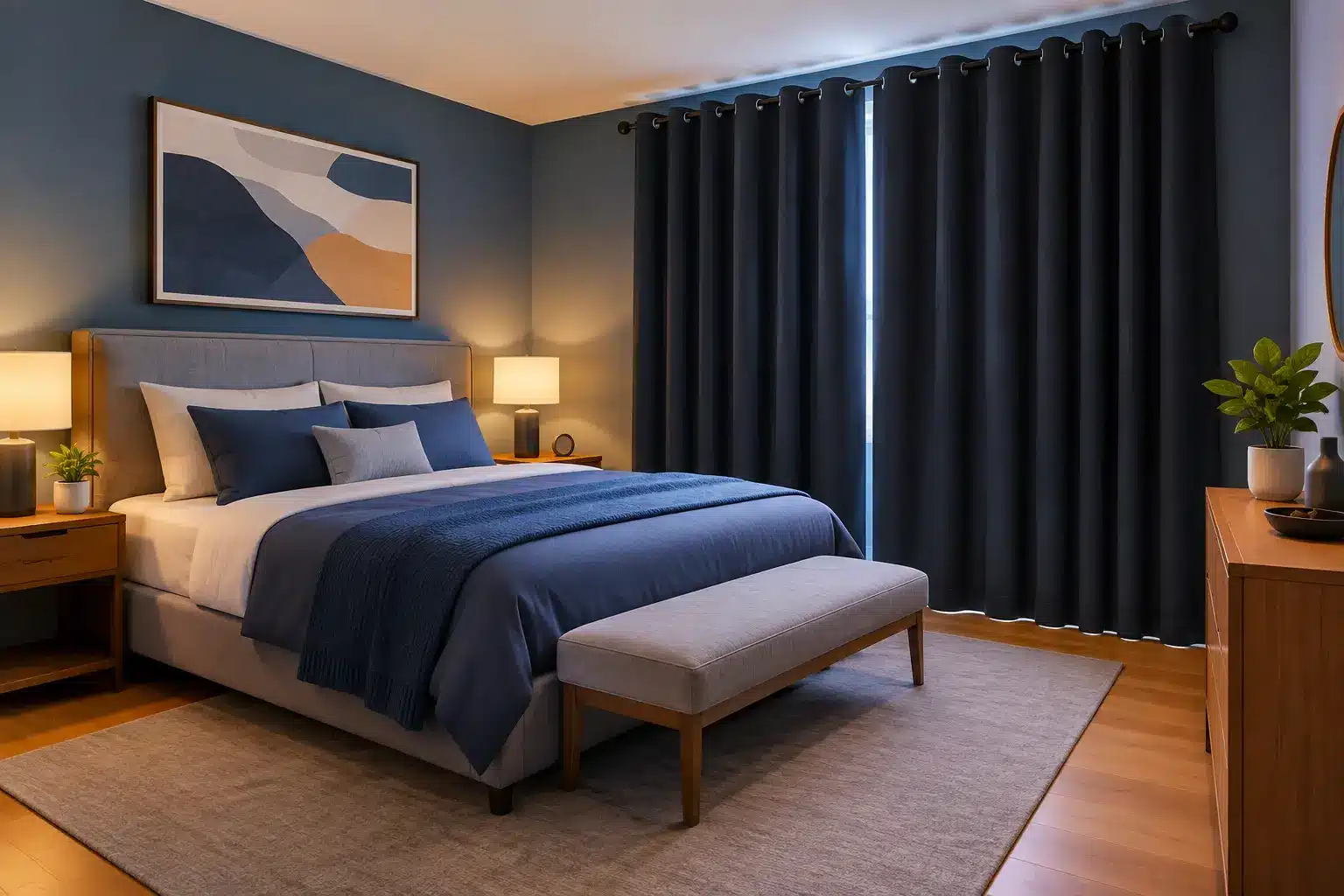
The difference between a bedroom that looks finished and one that truly supports rest is often visible at the window. Blackout curtains for bedrooms do more than darken the room: they soften streetlight glare, add a sense of privacy, help moderate heat, and bring visual warmth to the bed wall. The right pair should feel like part of the interior, not an afterthought hung simply to block the sun.
For homeowners furnishing a contemporary apartment, family home, or villa, the best choice comes down to more than selecting the darkest fabric. Coverage, installation height, lining, texture, and the way curtains relate to your furniture all affect the final result.
What Makes a Curtain Truly Blackout?
A true blackout curtain is designed to block most incoming light through a tightly woven or coated backing. This is different from room-darkening fabric, which reduces brightness but may still allow a noticeable glow through the material. If you are sensitive to early morning light, work night shifts, have young children, or simply prefer a darker room for sleep, blackout construction is worth specifying.
However, fabric alone cannot do all the work. Light often enters at the top, sides, and bottom of a window treatment. A beautiful blackout panel installed too narrowly can leave bright vertical gaps that defeat its purpose. For strong light control, the curtain track or rod should extend beyond both sides of the window, while the panels should have enough fullness to overlap when closed.
There is also a practical middle ground. In a bedroom that receives limited direct sun, room-darkening curtains may provide enough comfort while maintaining a lighter, more fluid drape. The best solution depends on the window orientation, nearby buildings, outdoor lighting, and your personal sleeping habits.
Choosing Blackout Curtains for Bedrooms by Need
Start with how the bedroom is used. A primary bedroom often benefits from a refined, layered treatment that balances darkness with a welcoming daytime feel. Sheer curtains can filter harsh daylight while blackout panels remain open at the sides, ready for evening privacy. This combination gives the room depth and makes the window feel more considered.
A child’s bedroom may call for dependable blackout coverage, especially when bedtime arrives before the sun has set. Choose a durable fabric and a smooth operating system that adults can open and close easily. Avoid overly delicate materials in rooms where curtains may be handled frequently.
Guest bedrooms benefit from flexibility. Visitors have different sleep schedules and comfort preferences, so blackout curtains create a more hotel-like experience without making the space feel heavy. A warm neutral fabric in beige, taupe, soft gray, or muted stone usually coordinates easily with changing linens and accessories.
For bedrooms facing busy streets or neighboring properties, privacy can be as valuable as darkness. A lined blackout curtain creates a more sheltered atmosphere at night, particularly in urban apartments where windows are close to other residences.
Fabric, Color, and Texture Matter
Many people assume blackout curtains must be thick, dark, and formal. Modern options are far more versatile. Linen-look fabrics, matte weaves, velvets, and softly textured polyester blends can all be paired with blackout lining. The front fabric sets the mood of the room, while the lining does the functional work behind it.
Velvet is a strong choice for rooms with upholstered beds, rich wood finishes, or a more intimate mood. It offers visual depth and naturally complements bedrooms designed for comfort. Its trade-off is weight: velvet generally needs a sturdy track or rod and may feel too formal in a very minimal room.
Linen-look and textured woven fabrics suit relaxed contemporary interiors. They bring softness without competing with patterned bedding, rugs, or statement headboards. Since natural linen itself may not provide complete light blockage, use a blackout lining when darkness is a priority.
Color deserves the same attention as fabric. Darker tones can make a large, bright bedroom feel grounded, but they may overwhelm a compact room with limited daylight. Light shades keep the room airy and can still perform well when properly lined. Rather than choosing a color solely for its ability to hide light, select one that relates to your walls, bed upholstery, and flooring.
Get the Measurements Right Before Ordering
The most polished window treatments begin above the window frame, not at it. Mounting curtains higher creates a more generous sense of ceiling height, while a wider track allows panels to stack back from the glass when open. This lets in more natural light during the day and makes the window appear larger.
For width, the finished curtain fabric should generally be about one and a half to two times the track width, depending on the heading style and the level of fullness you prefer. Too little fabric creates a flat, stretched appearance and can compromise light coverage. A fuller treatment feels more luxurious and provides better visual softness.
For length, floor-length curtains are usually the most elegant choice in bedrooms. They can just touch the floor for a clean tailored finish, or rest very slightly on it for a softer look. Curtains that stop noticeably above the floor often make an otherwise well-furnished room feel unfinished.
Measure more than once, particularly where floors are uneven, ceilings vary in height, or a window sits behind furniture. In custom homes and renovation projects, seemingly small differences can affect how panels hang. A tailored solution is especially useful for unusually wide windows, corner glazing, bay windows, and tall sliding doors.
Tracks, Rods, and Layering Options
The hardware you choose affects both performance and style. Ceiling-mounted tracks are often the best option for a clean, contemporary bedroom. They allow curtains to sit close to the ceiling, move smoothly, and cover more of the window perimeter. A recessed track can create an especially streamlined finish in new-build or renovation settings.
Decorative rods work well when the hardware is intended to be seen. Black, brushed metal, warm brass, and wood-toned rods can echo bed frames, lighting, or side tables. Just make sure the rod projects far enough from the wall to accommodate both the curtain fabric and any sheer layer.
Layering sheers with blackout panels is not always necessary, but it is one of the most useful approaches for bedrooms. Sheers handle daytime privacy and diffuse direct sun. Blackout panels take over at night. In rooms with striking views, this arrangement helps you enjoy the outlook during the day without giving up comfort after dark.
Motorized tracks are worth considering for large windows, high ceilings, or bedrooms where convenience is a priority. They can make daily use easier and preserve the neat hang of heavy panels. For hospitality suites and premium residential projects, they also add a quiet sense of considered comfort.
Common Mistakes That Reduce Light Control
The first mistake is choosing panels that are exactly the width of the window. Blackout curtains need extra width beyond the frame to reduce side gaps. The second is installing the rod too low, which leaves a band of light above the curtains and visually shortens the room.
Another common issue is selecting a blackout fabric without considering its reverse side. The lining should be suited to the room’s light exposure and the fabric’s weight. A good lining supports the face fabric, improves drape, and can help protect color from strong sun over time.
Finally, do not treat curtains as separate from the room’s overall composition. The best bedroom schemes connect the window treatment to the headboard, rug, accent chair, bedding, and wall finish. The curtain does not need to match everything exactly, but it should belong in the same visual conversation.
A More Personal Finish for the Bedroom
Ready-made curtains can be a practical starting point for standard windows, especially when speed and budget are the main priorities. Yet custom blackout curtains offer more control where it matters: exact drop, preferred fullness, fabric selection, lining level, heading style, and track placement. That difference is most noticeable in bedrooms with generous windows or carefully selected furniture.
At Homess, curtains can be considered as part of the complete room rather than as a final accessory. Coordinating upholstery, finishes, and window treatments helps create a bedroom that feels calm from every angle.
Choose the treatment that supports the way you actually rest. When the fabric falls well, the room stays comfortably private, and morning light arrives on your terms, a bedroom becomes easier to live in every day.