


Blog
Poufs for Small Spaces That Work Harder

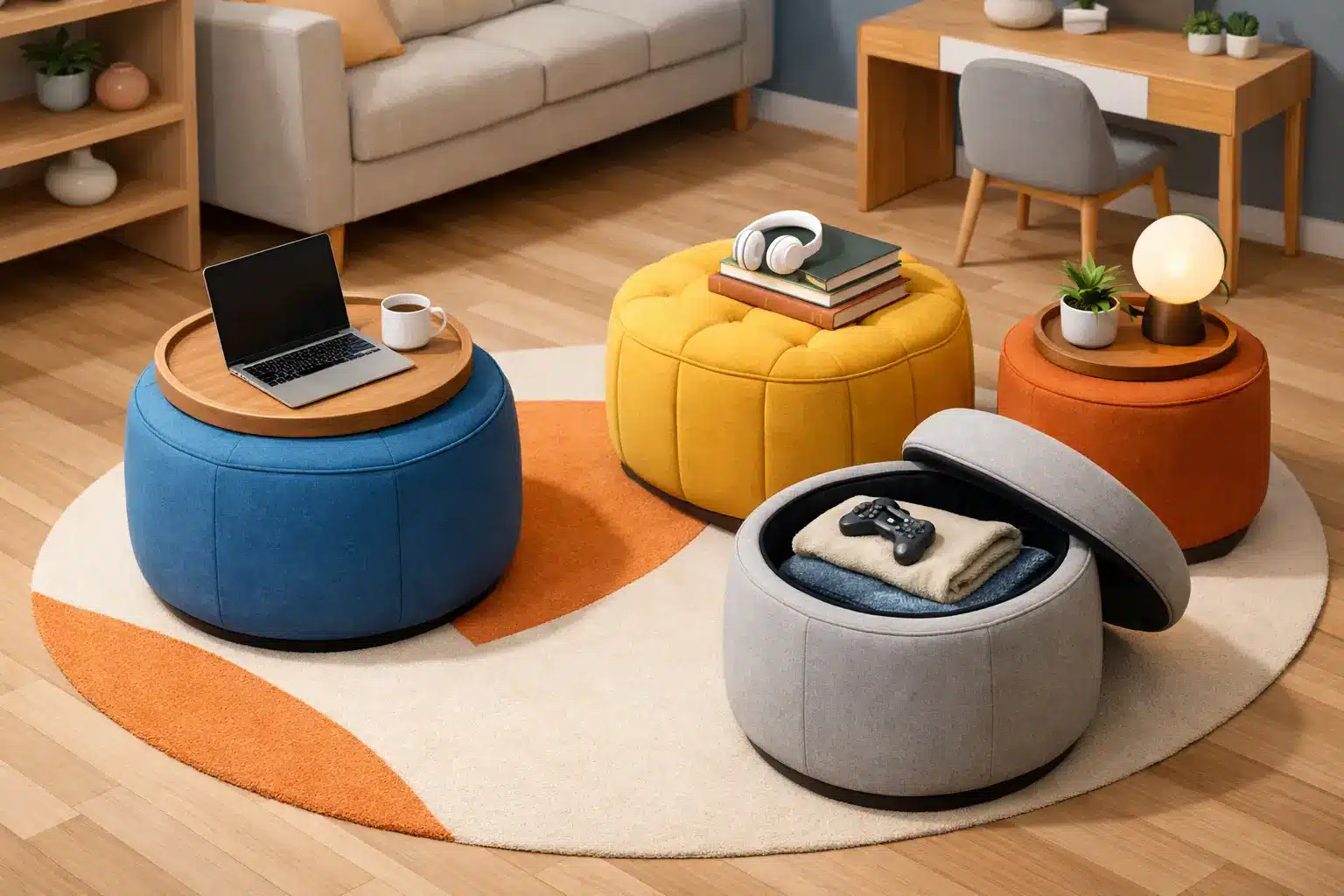
A compact living room rarely needs more furniture. It needs furniture that earns its place. Poufs for small spaces answer that need with a light footprint and several useful roles: an extra seat when friends arrive, a footrest at the end of the day, a soft surface for a tray, or a piece that can disappear under a console when the room needs to feel open.
The appeal is not simply their size. A well-chosen pouf can make a room feel more finished without introducing the visual weight of another armchair or bulky ottoman. For apartments, bedrooms, children’s rooms, and smaller reception settings, it is one of the most adaptable pieces in a contemporary furniture plan.
Why a Pouf Makes Sense in a Compact Room
Small rooms work best when circulation stays clear. A pouf is easy to pull close to a sofa, move beside a window, or shift away from a walkway in seconds. Unlike a fixed occasional chair, it does not dictate the entire layout.
Its lower profile also helps preserve sightlines. In a living area with a compact sofa, a low upholstered pouf lets the room breathe, especially when placed in front of a window or near a media wall. The result is comfortable and layered rather than crowded.
There is also a practical advantage for households that entertain. One or two poufs can provide relaxed seating without asking you to dedicate valuable floor area to chairs that may only be used occasionally. In a family home, they are equally useful for children’s seating, reading corners, and informal gatherings around a coffee table.
Choosing Poufs for Small Spaces by Function
Before selecting fabric or color, decide what the pouf will do most often. The right form depends on whether you need a footrest, guest seating, a compact table alternative, or a little extra storage.
For flexible guest seating
Choose a firmer, structured upholstered pouf with a stable base. It should hold its shape when someone sits on it and be easy to move with one hand. Round designs soften a room filled with straight-lined sofas and cabinetry, while square poufs sit neatly beside a coffee table or at the end of a bed.
Height matters here. A pouf that is close to the seat height of your sofa feels more natural for adults to use, but avoid an oversized design that rises above the sofa cushion. In a compact room, proportion is what keeps extra seating from looking accidental.
For relaxed everyday comfort
If the pouf will mainly serve as a footrest, a softer upholstered style can be the most inviting choice. Place it approximately 14 to 18 inches from the sofa so there is enough room to sit down and move around it comfortably. A generously padded piece can make a streamlined sofa feel far more lounge-ready without requiring a larger sectional.
Fabric selection should reflect daily life. Textured woven upholstery brings warmth and works well in calm, layered interiors. Leather or performance upholstery may be easier to maintain in homes with young children, pets, or frequent guests. The best choice is not always the palest or most delicate fabric – it is the one that still looks considered after regular use.
For storage without adding a cabinet
A storage pouf is especially helpful in apartments and bedrooms where every concealed compartment counts. It can hold throws, toys, magazines, chargers, or extra cushions while keeping the room visually calm. Use it near the sofa as a soft alternative to a side table, or position a pair at the foot of a bed to create a finished look with practical benefit.
There is a trade-off. Storage models are often more structured and can feel heavier than simple upholstered poufs. Select a design with enough interior capacity to be useful, but keep the outer dimensions modest. If it interrupts the path from the bedroom door to the wardrobe, it is too large for the room.
For use as a coffee table alternative
A firm, flat-topped pouf can replace a traditional coffee table in a narrow living room, particularly when sharp corners are not ideal for children. Add a tray to create a stable surface for drinks, candles, or remotes. The tray should be proportionate to the top, leaving an upholstered border visible so the arrangement feels intentional.
This option works best when you do not rely on a coffee table for extensive storage or large serving surfaces. If you often host full meals in the living room, a compact nesting table or a lift-top table may be more practical. A pouf is strongest when comfort and flexibility take priority.
Get the Scale Right Before You Choose the Style
A beautiful pouf can still make a small room feel awkward if its dimensions are wrong. Start with the open floor area rather than the empty corner. Measure the available space and leave a clear route around the piece, particularly between a sofa and a television unit or between a bed and wardrobe.
For most small living rooms, one medium pouf or two smaller matching poufs offers more flexibility than a single oversized ottoman. Two pieces can sit together as a central footrest, separate when more seats are needed, or tuck under a console table. This arrangement gives the room options without making it feel overfurnished.
Shape changes the visual effect as well. Round poufs ease circulation in tight spaces and introduce softness beside rectangular furniture. Square or rectangular designs are more efficient when aligned with a sofa, bench, or bed. Cylindrical poufs are particularly useful beside an accent chair, where their compact silhouette provides a place to rest a book or briefly set down a tray.
Make the Pouf Belong to the Room
In a small interior, every visible item contributes to the overall composition. A pouf does not have to match the sofa exactly, but it should relate to the room through color, texture, or detailing.
For a quiet, spacious effect, select upholstery within the same color family as the main seating. A sand, stone, taupe, or warm gray pouf can blend into a neutral room while adding tactile interest through bouclé, linen-look fabric, or a subtle weave. This approach is well suited to smaller apartments where visual calm matters as much as function.
A contrasting pouf can be equally successful when the rest of the room is restrained. Deep olive, tobacco, terracotta, navy, or charcoal can ground a pale sofa and introduce character without the commitment of a larger statement chair. Repeating that accent in a cushion, artwork, or curtain detail creates cohesion.
Details deserve attention. Piping, channel tufting, timber feet, leather straps, and tailored seams can make a compact piece feel considered rather than temporary. In a refined interior, craftsmanship is often visible in these smaller decisions.
Consider Custom Dimensions When the Layout Is Unusual
Standard furniture dimensions do not always suit a narrow apartment lounge, an angled bedroom corner, or a hospitality waiting area with a specific circulation plan. In these settings, custom sizing can be the difference between a pouf that merely fits and one that feels designed for the space.
A made-to-order option allows you to adjust width, height, upholstery, and finish to coordinate with existing sofas, curtains, or headboards. It is particularly valuable when matching several poufs across a reception area or creating a tailored pair for the foot of a bed. Homess by Sky Space Furniture can support this kind of coordinated furnishing approach for residential and project requirements.
Customization should still be guided by use. A delicate fabric may suit a low-traffic bedroom, while a lobby or family living room needs upholstery selected for more regular wear. A larger pouf may offer generous comfort, but a slimmer profile could preserve the flow of a compact room. Good design comes from balancing both needs.
Where a Small Pouf Has the Biggest Impact
The living room is the obvious place, but it is not the only one. In an entryway, a compact pouf creates a comfortable point for putting on shoes without requiring a full bench. In a bedroom, it can soften the area beside a vanity or complete the foot of the bed. In a children’s room, a lightweight upholstered pouf supports play, reading, and casual seating while being easier to reposition than a chair.
For hospitality and shared spaces, clusters of poufs can make waiting areas feel warmer and less formal. The key is to maintain enough clearance between pieces and select durable upholstery that supports daily use. Smaller furniture should still deliver the same sense of comfort and quality as a larger lounge setting.
The most successful pouf is not the one that fills an empty spot. It is the one that gives your room another way to work – then sits quietly and beautifully in place when it is not needed.